
Wine storage · 6 min read
When a Sub-Zero wine column drifts warm in an Orinda cellar
Orinda homes sit a short drive from the Lamorinda wine trail, and a lot of them store the bottles to prove it. When a Sub-Zero wine column drifts warm, here's what's actually wrong.
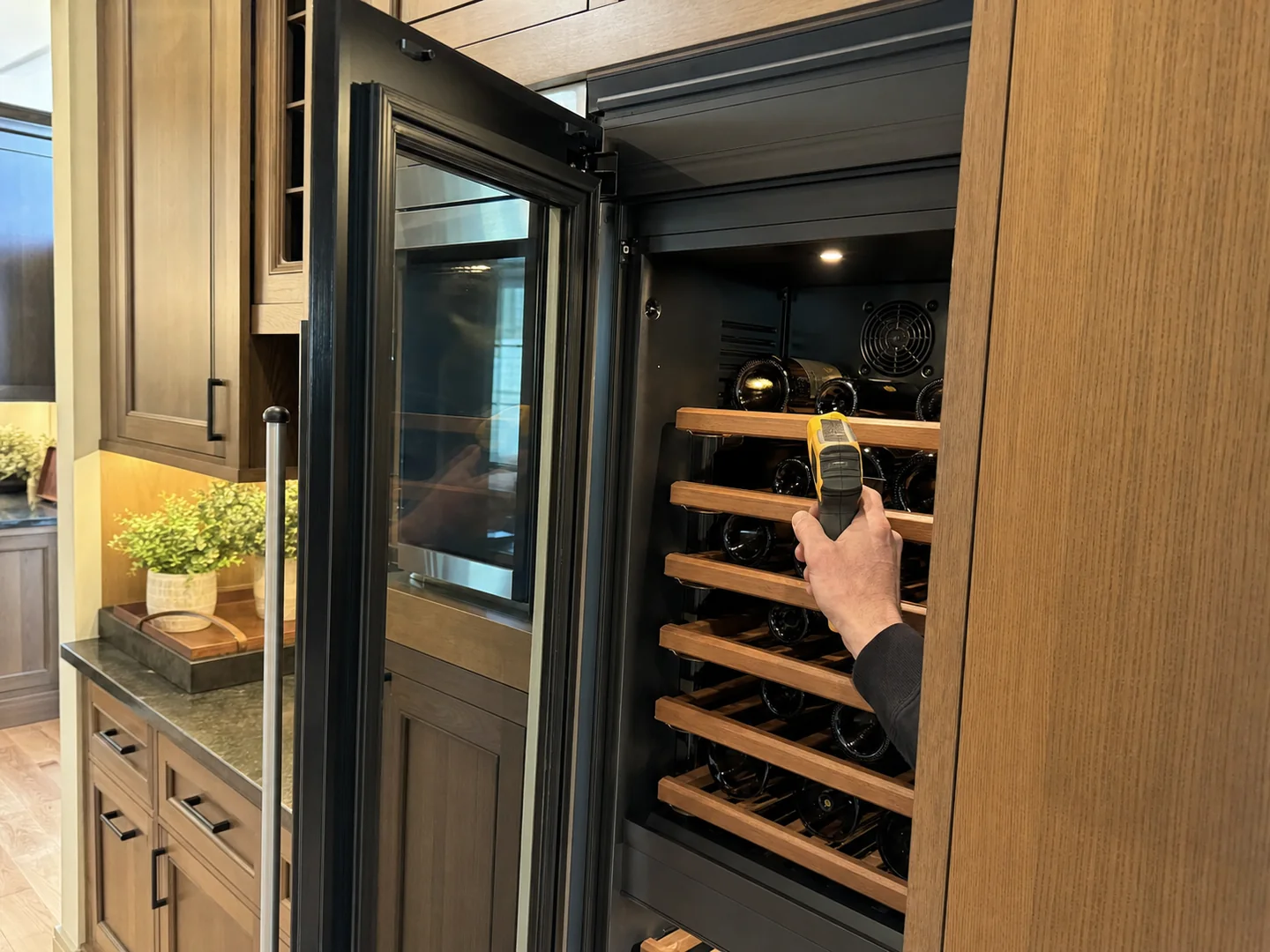
A house up off Camino Pablo or tucked into the El Toyonal hills tends to take wine seriously. The Lamorinda appellation starts essentially at the back door, the tastings down toward Moraga are a short drive, and a serious collection follows naturally — which is why so many Orinda kitchens and butler's pantries hold a built-in Sub-Zero wine column rather than a beverage fridge.
That unit is doing something a regular refrigerator never has to: holding two different cellar temperatures, gently and without vibration, for years on end. So when it drifts, the symptoms are quieter and the stakes are higher. A reds zone that creeps from the high 50s up toward 60-something won't spoil a bottle overnight, but over a hot Orinda summer it ages a collection faster than its owner intended.
Dual-zone drift is the complaint we hear first
Almost every Sub-Zero wine unit runs two independently set zones — a cooler band for whites and sparkling, a warmer one for reds — and the most common call is that one of them has quietly wandered off its setpoint. The usual cause is a failing zone thermistor: the small sensor that tells the control how warm that compartment actually is. When it drifts, the unit defends a temperature that no longer matches the dial, and you don't notice until a digital readout or a cellar thermometer disagrees with what you set. We meter each zone sensor against its resistance curve rather than guessing, because a healthy compressor chasing a lying sensor looks exactly like a dying compressor until you actually test the probe.
Airflow, the sealed system, and the things heat loads up
A wine column sheds its heat through a condenser behind the lower grille, and in Orinda's warm-afternoon kitchens that coil works harder than most owners realize — especially once a late-summer day beyond the Caldecott has the room itself sitting in the 80s. A dust-loaded condenser, a tired evaporator fan, or a unit boxed into tight cabinetry with no breathing room all push the whole zone warm together, which is a different fault than a single drifting sensor and is diagnosed differently. Past the airflow side sits the sealed system — compressor and refrigerant circuit — and a genuine sealed-system leak is the one repair where the math gets honest: on an older column it can cost enough that replacement deserves a real conversation rather than an automatic yes.
The quiet faults: gaskets, UV glass, and vibration
Two things particular to wine storage round out what we see. First, the door: a wine column's seal and its UV-tinted glass are there to hold a steady, dark, humidified environment, so a gasket that no longer grips — common after a few damp Lamorinda winters — lets warm room air leak in and forces the unit to run long against humidity it shouldn't be fighting. Second, vibration. A compressor mount or a fan bearing that has started to buzz doesn't just annoy; sustained vibration disturbs the sediment in older reds, which is precisely the harm a cellar is supposed to prevent. A column that has begun to hum or rattle is worth a look before it costs you a bottle.
Questions & answers
One zone is warm but the other is fine — what's likely wrong?
A single zone that has drifted off its setpoint usually points to that zone's temperature sensor rather than the compressor. We meter the thermistor against its spec curve to confirm before replacing anything.
Is my Sub-Zero wine unit worth repairing or should I replace it?
Most faults — a sensor, a fan, a gasket, a clogged condenser — are straightforward, worthwhile repairs. The one exception is a sealed-system refrigerant leak on an older column, where the cost can be high enough that we'll talk replacement through honestly before you commit.
Does the wine cooler have anything to do with my Wolf appliances?
No — wine storage is Sub-Zero's refrigeration side. Wolf is the cooking brand. We service both, but a warm wine column is a refrigeration diagnosis, not a cooking one.
Go deeper
More Orinda guides
Picking the Right Sub-Zero Repair Service in Orinda: Access, Alcoves, and Price
How to vet a Sub-Zero repair company for an Orinda hillside kitchen: the access question to lead with, alcove heat traps, proof to ask for, fair price bands.
Read the guide → Condenser care · 5 minSub-Zero Condenser Coil Cleaning: An Orinda Owner's Guide
Why a Sub-Zero condenser coil clogs in Orinda's wooded hills, the twice-a-year cleaning routine, warm-running signs, and when pro service is worth it.
Read the guide → Dual Refrigeration Explained · 7 minOne Side Warm, One Side Cold: Understanding Sub-Zero Dual Refrigeration in Orinda
One side of your Sub-Zero warm, the other cold in Orinda? Learn how dual refrigeration works, why a warm compartment is a clue, and what to check first.
Read the guide →Rather leave it to a specialist?
Have the failing compartment and model number ready, and you will get a real first opinion — not a sales pitch.