
Condenser care · 5 min read
Sub-Zero Condenser Coil Cleaning: An Orinda Owner's Guide
Why a Sub-Zero condenser coil clogs in Orinda's wooded hills, the twice-a-year cleaning routine, warm-running signs, and when pro service is worth it.
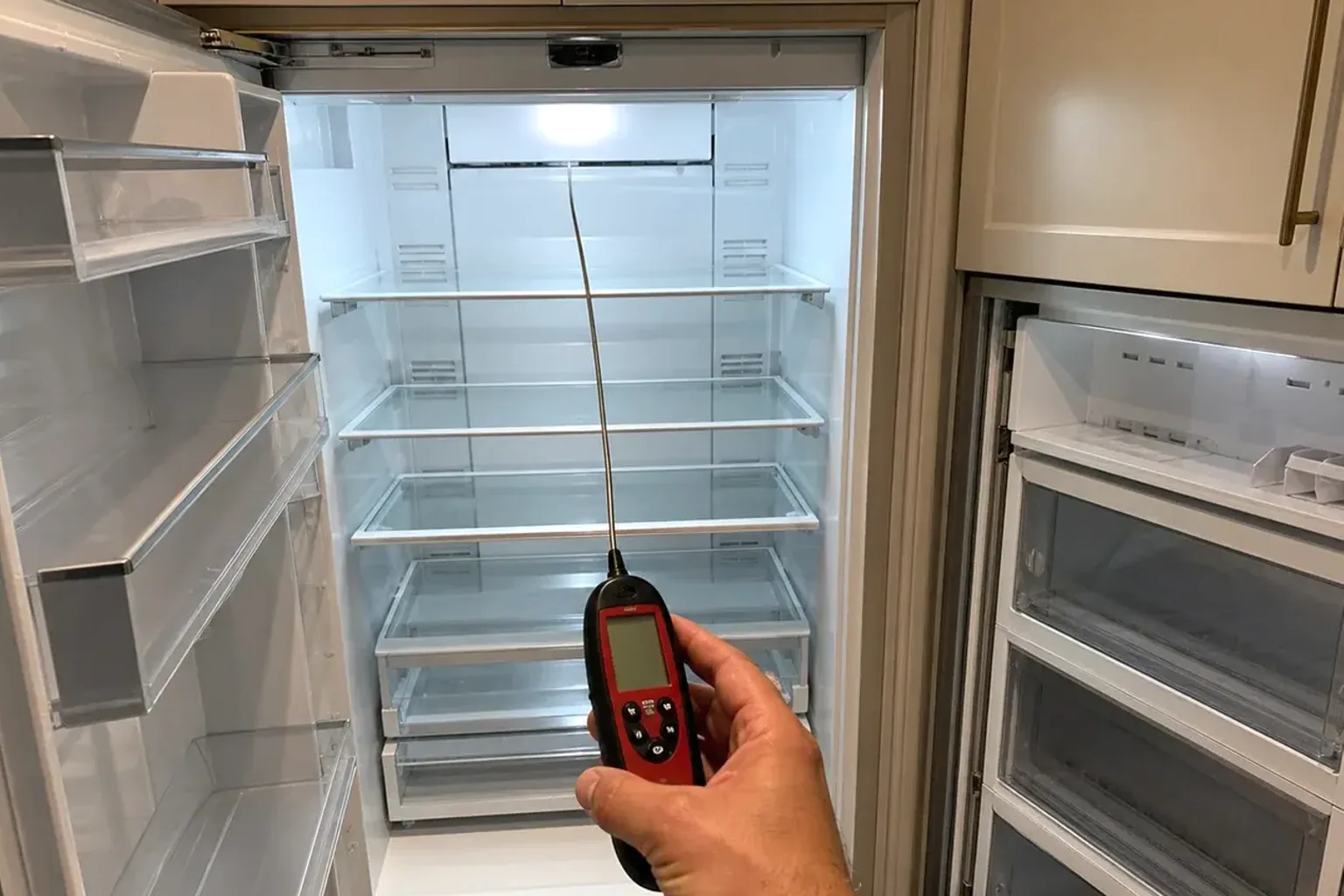
A Sub-Zero condenser coil is engineered to keep a compressor running past 20 years, yet in Orinda's wooded 94563 hills a coil packed with dust and pet hair can shave years off that life and leave the refrigerator drifting to 42°F when it should hold 38°F. Condenser care is the single most neglected point on a built-in Sub-Zero, because the coil hides behind the upper grille where almost no owner ever looks. This guide walks through the twice-a-year cleaning routine that keeps airflow open, run cycles short, and the compressor cool on Orinda's oak-shaded lots. A clogged coil forces the sealed system to labor, and the warm-running complaints that follow are almost always an airflow problem rather than a refrigerant one.
Why Does the Sub-Zero Condenser Coil Get So Dirty in Orinda?
Orinda's oak-shaded hillside lots throw an unusual amount of organic debris at a Sub-Zero condenser coil, which is why local units foul faster than flatland homes. Pollen from spring oaks, fine trail dust tracked in from the ridges, and pet hair from the dogs that come with big wooded properties all drift toward the compressor compartment, where the cooling fan pulls them straight into the coil's aluminum fins. The built-in Sub-Zero mounts its condenser high behind the upper grille rather than at the floor, so the fan runs nearly constantly and acts like a vacuum for airborne grit. Households with two or more shedding pets can pack a coil solid in three to four months, far short of the twice-a-year interval that suits a cleaner home. Grease vapor from an adjacent Wolf range compounds the trouble, binding loose dust into a felt-like mat that a quick wipe will never lift off the fins.
What Happens When Airflow Across the Coil Is Blocked?
A blocked Sub-Zero condenser coil cannot shed the heat the refrigerant carries away from the cabinet, so the whole sealed system backs up and the box slowly runs warm. When the fins clog, head pressure climbs, the compressor works against resistance, and run cycles stretch from a healthy fraction of the hour toward nearly nonstop. Owners usually notice the symptom before the cause: ice cream softens, the fresh-food side drifts from 38°F up toward 42°F, and the unit hums for hours without ever satisfying. A choked coil also runs the compressor hotter, and sustained heat is exactly what shortens its life from the 20-plus years Sub-Zero engineers it to reach. Every warm-running complaint on a coil this dirty is an airflow failure, not a refrigerant leak, which is the single most expensive misdiagnosis an Orinda owner can chase.
How Often Should You Clean a Sub-Zero Condenser in a Wooded Home?
Sub-Zero's own guidance sets a twice-a-year condenser cleaning as the baseline, and for a tidy home without pets that six-month rhythm holds up well. Orinda's wooded setting changes the math, though, because the debris load here is heavier than the manual assumes. Homes with one dog or cat do better on a four-month schedule, and a house with multiple shedding pets or a gravel driveway that kicks up dust should plan on clearing the coil every three months. A simple test settles the question: pull the upper grille and look at the fins, and if grey felting or hair is bridging the aluminum, you have already waited too long. Mark the calendar for spring and fall as anchor dates, then add a summer pass if the box sits near a busy kitchen or a shedding pet. Consistent short intervals beat one heroic annual scrub, because a coil kept open never gets the chance to choke in the first place.
How Do You Clean the Condenser Coil Step by Step?
Cleaning a Sub-Zero condenser coil is a genuine do-it-yourself job, and the routine takes about fifteen minutes once you have done it a single time. Start by switching the unit off at the control panel so the fan cannot pull debris deeper while you work, then remove the upper grille, which usually lifts up and out or releases with a couple of screws. With the grille off, the coil sits exposed across the top of the compartment. Vacuum the loose hair and dust first with a brush attachment, working along the fins rather than crushing them, then loosen the packed felt with a soft appliance brush and vacuum a second time. Wipe the compressor and the fan blade, confirm nothing obstructs the fan's swing, reseat the grille, and switch the unit back on. Keep a light touch throughout, because the thin aluminum fins dent easily and bent fins block airflow as badly as dust does.
When Is a Warm-Running Sub-Zero a Coil Problem Instead of the Sealed System?
Telling a dirty coil apart from a failing sealed system is the judgment call that decides whether you reach for a vacuum or the phone. A refrigerator that runs warm but recovers within a day of a thorough coil cleaning was almost certainly starved for airflow, and no further work is needed. A unit that stays warm after the fins are spotless, or that shows frost creeping across the wrong panel, points past the condenser to a sealed-system fault that only a technician should open. Professional coil service that bundles a proper condenser cleaning, an airflow reading, and a frost-pattern fix runs $300 to $650 in Orinda, and it doubles as a diagnosis when cleaning alone will not settle the warmth. The tell is timing: airflow problems ease the moment the coil breathes again, while refrigerant and compressor faults hold their temperature no matter how clean the fins get.
Should Orinda Owners Clean the Coil Themselves or Book a Pro?
Most Orinda owners can and should handle condenser cleaning themselves, because it needs no refrigerant work, no tools beyond a vacuum and a soft brush, and no panel that risks the warranty to open. Booking a pro makes sense in three situations: the coil sits behind a tight cabinet that will not clear, the unit stays warm after a careful cleaning, or the owner simply wants the job documented alongside a full checkup. A diagnostic service call is $89, credited toward any repair that follows, so having a technician confirm the coil is truly the culprit costs little when the symptom is stubborn. For a freezer that runs warm or a fridge that will not hold temperature after you have cleaned the fins, searching for freezer repair near me and booking a local Sub-Zero visit is the sensible next step rather than guessing at parts. Keep the twice-a-year cleaning on the calendar either way, since prevention stays far cheaper than a warm-box repair.
Questions & answers
How do I know if my Sub-Zero's condenser coil needs cleaning?
Pull the upper grille and look at the fins; grey felting or hair bridging the aluminum means it is overdue. A fridge drifting from 38°F toward 42°F with long run cycles is another clear sign the coil is choked.
How much does professional Sub-Zero condenser service cost in Orinda?
Professional coil cleaning with an airflow reading and frost-pattern fix runs $300 to $650, and the diagnostic service call is $89, credited toward the repair when work follows. For hands-on help, Orinda Sub-Zero Repair answers at (925) 940-3576.
Can a dirty condenser coil really make a Sub-Zero run warm?
Yes; a clogged coil traps compressor heat, stretches run cycles, and lets the cabinet climb above its 38°F target. Warm running on a filthy coil is almost always airflow, not a refrigerant leak.
Go deeper
More Orinda guides
Why Your Freezer Is Frosting Up, and Where the Frost Points
Freezer frost means humid air is getting in or the defrost cycle has quit. Read where the frost forms, what to check safely, and why you should never chip it.
Read the guide → Choosing a repair service · 7 minPicking the Right Sub-Zero Repair Service in Orinda: Access, Alcoves, and Price
How to vet a Sub-Zero repair company for an Orinda hillside kitchen: the access question to lead with, alcove heat traps, proof to ask for, fair price bands.
Read the guide → Dual Refrigeration Explained · 7 minOne Side Warm, One Side Cold: Understanding Sub-Zero Dual Refrigeration in Orinda
One side of your Sub-Zero warm, the other cold in Orinda? Learn how dual refrigeration works, why a warm compartment is a clue, and what to check first.
Read the guide →Rather leave it to a specialist?
Have the failing compartment and model number ready, and you will get a real first opinion — not a sales pitch.
| Compressor design life | 20-plus years with a clean condenser coil |
|---|---|
| Warm-running symptom | Cabinet drifts from 38°F toward 42°F |
| Cleaning interval | Twice a year, every three months with pets or dust |
| Professional coil service | $300 to $650, plus an $89 diagnostic call credited toward repair |
| Same-day service | Orinda Sub-Zero Repair — (925) 940-3576 |
What customers say
Our built-in Sub-Zero had been running warm for weeks and humming almost nonstop. The tech pulled the upper grille and found the condenser coil packed solid with dog hair from our two retrievers, cleaned it thoroughly, and the fridge was back to temperature by morning. Four stars only because I wish they had walked me through doing the twice-a-year cleaning myself.
We live up in the oaks off Sleepy Hollow and our Sub-Zero coil fouls fast. They cleaned it, took an airflow reading, and confirmed the sealed system was fine, no expensive scare. Honest work, and they told me to set a three-month reminder given our pets and the road dust.
I was sure our warm Sub-Zero meant a refrigerant leak and a huge bill. Turned out the condenser coil behind the grille was matted with pollen and pet hair. Cleaned in under half an hour, temperature recovered the same day, and the price was fair. Wish I had known to check the coil years ago.
Book this repair: Sub-Zero Maintenance in Orinda | Orinda Sub-Zero Repair · Sub-Zero Not Cooling in Orinda | Orinda Sub-Zero Repair